
CARIBBEAN MICRO GRIDS
In the Caribbean, micro grids are helping keep the lights on while providing cost savings and energy independence. Across the region, resorts are no longer treating electricity as a service that arrives from the grid, they are treating it as core infrastructure that they own and manage. Aging power plants, long fuel supply chains, and more intense storms have turned reliable energy into one of the biggest operational risks in tourism, so hotels and other facilities are moving toward their own power plants, built on microgrids, solar installations, and high efficiency generators.
Beach Cities Solar Consulting LLC partners with ATEC BVI, a company which designs integrated microturbine and energy systems for resorts and other large businesses in the region, to design and build micro grids on behalf of their mutual clients. ATEC described how properties are installing on site generation that can run through blackouts, cut energy bills, and help meet climate targets, while guests remain unaware that anything is happening outside the property line. What once was a simple backup generator near the maintenance shed is evolving into a full microgrid, a mix of gas fueled turbines, solar panels, batteries, and smart controls that can operate with or without the public utility.
Why Caribbean resorts are moving to micro grids
Electricity has always been expensive in island economies because of imported fuel and small grid scale. For hotels and other businesses, power is one of the top operating costs, especially for air conditioning, water heating, refrigeration, and laundry. The region has also seen repeated grid failures after hurricanes and tropical storms, from Puerto Rico and the Virgin Islands to the Eastern Caribbean.
When a grid goes down for hours or days, a resort or business without strong backup can lose food, cancel events, and in extreme cases evacuate guests. They are investing in systems that run every day, not just during an outage, and that are designed for efficiency rather than emergency only use.
ATEC and similar providers typically design combined heat and power systems around gas microturbines. The turbines produce electricity, and the waste heat is captured for hot water or used to drive absorption chillers for cooling. When combined with solar and batteries, these systems can reduce overall energy use from traditional diesel set ups by an estimated 20 to 40 percent, according to manufacturers and project case studies. For resorts that are open all year, payback periods often fall in the range of three to six years, depending on local fuel prices and any available incentives.
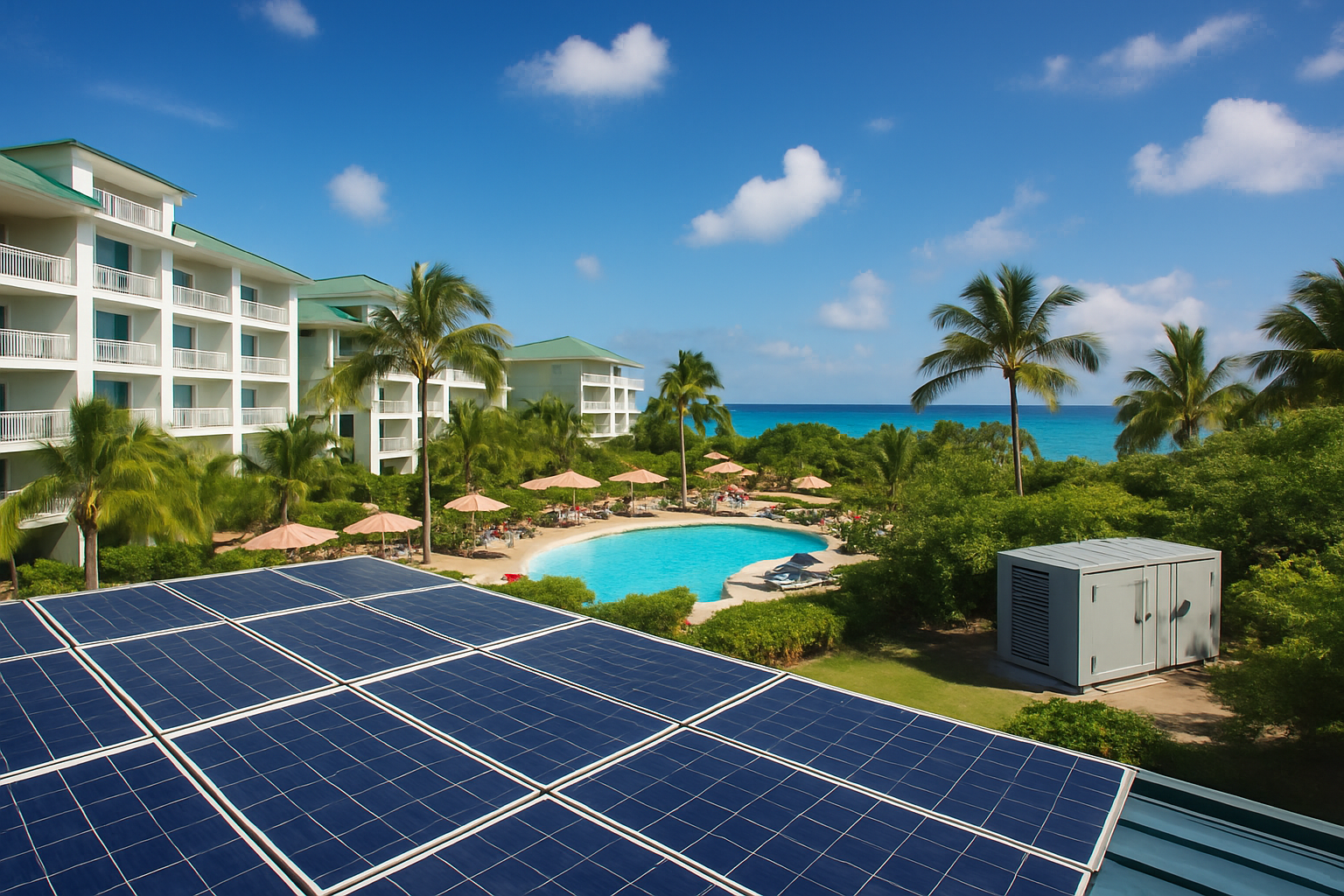
Aruba, a Caribbean nation with solar rooftops and micro grids
Aruba has become one of the clearest examples of how resort energy strategies and national policy can align. The island’s government has long stated a goal of transitioning away from heavy fuel oil and has supported projects that mix wind, solar, and microgrids. On the private sector side, several resorts are now well known for their clean energy projects:
Bucuti & Tara Beach Resort is certified carbon neutral and is working toward becoming carbon negative. The resort has installed a self sufficient microgrid for its administrative offices, part of a broader program that uses efficiency, renewables, and carbon offsetting to cut emissions. Manchebo Beach Resort and Spa launched a solar project in 2021 that supplies around 20 percent of its electricity demand from rooftop panels. Hyatt Regency Aruba Resort and Casino uses a large solar thermal system on the roof to provide hot water for showers, laundry, and kitchens, reducing dependence on fuel oil.
These projects do not replace the national grid entirely, but they represent a structural shift. Resorts and other Caribbean businesses are managing a larger share of their own demand, they are more resilient after storms, and they promote the energy story as part of their brand. Aruba’s experience shows how high energy prices, combined with a clear policy direction, can push hotels to invest in on site systems rather than only buying power from the utility.
Curaçao and the rise of solar powered beach resorts
Curaçao offers another concrete example of what resort level power generation looks like in practice. LionsDive Beach Resort, located near Mambo Beach, already gets about 70 percent of its daytime power from around 600 solar panels installed on rooftops. Management has publicly said the goal is to reach close to 100 percent daytime coverage by expanding the solar capacity further.
The resort has also worked with a local partner to produce drinking water from seawater and provides guests with refillable bottles so they draw chilled water from taps around the property instead of buying imported plastic bottles. That is a water story as much as an energy one, yet it shows how a focus on resources pushes resorts toward integrated infrastructure solutions where power and water security are treated together.
Similar, though smaller scale, solar projects can be found elsewhere on the island, often supported by local engineering firms and regional financing programs. These installations are not always described as microgrids, but they move properties in that direction by giving owners control over at least part of their generation.
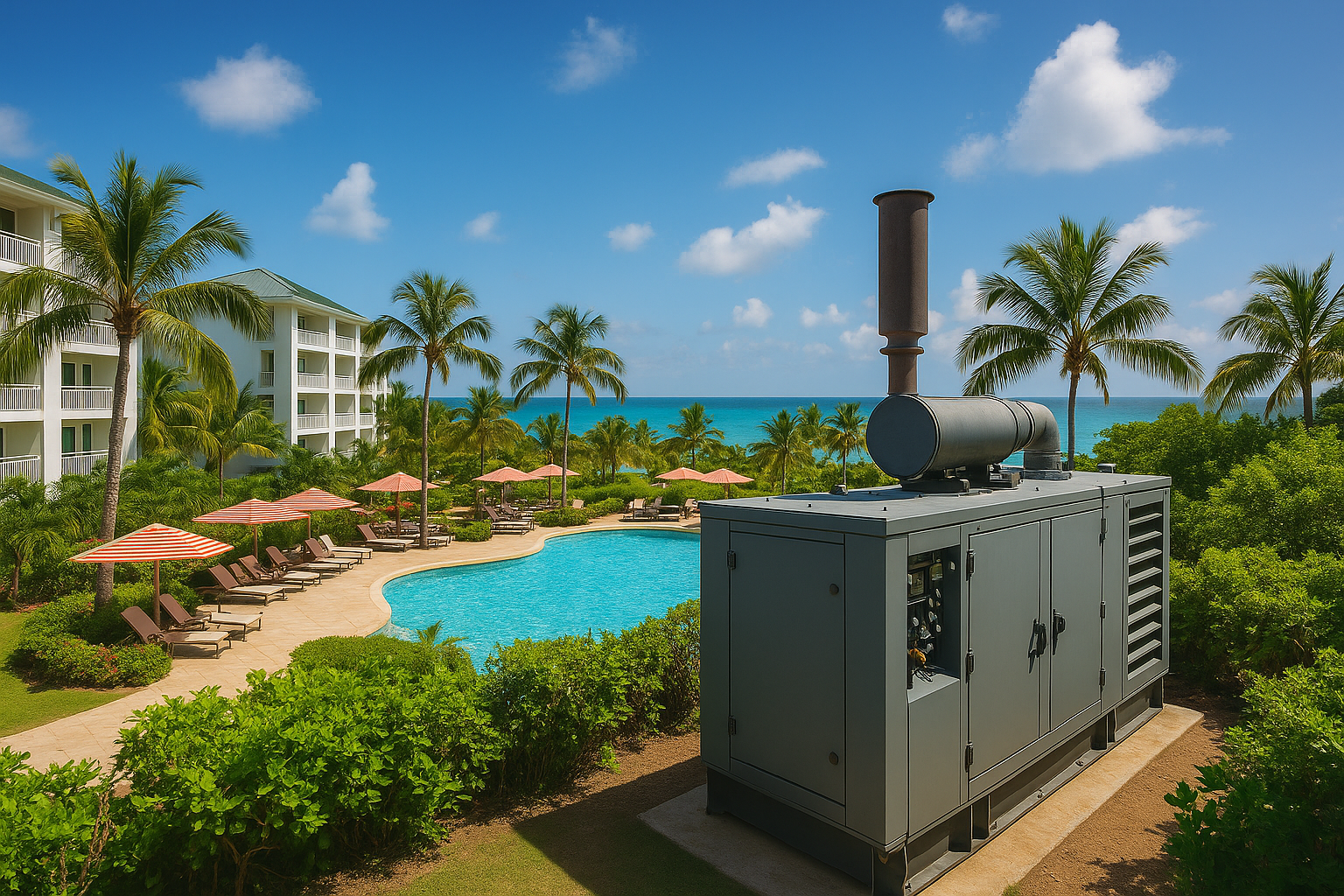
Caribbean resorts are implementing micro grids that combine solar, batteries, generators, CHP, and other technologies
The economics and policy case for micro grids in the Caribbean
The Caribbean Hotel and Tourism Association, in a 2025 policy paper on renewable energy, argues that easier access to clean energy and storage is now a competitiveness issue for the region’s tourism industry, not only an environmental preference. Electricity can account for 10 to 25 percent of hotel operating costs, depending on the property type and location, so reducing exposure to fuel price shocks improves profitability and helps keep room rates stable.
The paper calls for regulatory frameworks that allow hotels to install renewable systems, use storage, and in some cases sell excess electricity, while maintaining grid stability. It also notes that global travelers and corporate groups increasingly look at sustainability credentials, including carbon footprints and renewable energy use, when choosing destinations and venues.
Resorts with well designed microgrids see energy savings, but managers also highlight non financial benefits like guest comfort, reputation, and peace of mind. One Caribbean property that installed a 1.8 megawatt system roughly a decade ago was able to meet all its electricity demand and keep operations running through a series of local blackouts, while nearby properties went dark.
Barriers and what comes next
Despite high interest, not every Caribbean hotel or business can simply sign a contract and flip a switch to on site power. The region still faces overlapping regulatory regimes, complex interconnection standards, and uncertainty in some islands about how distributed generation will be treated over time. Financing is another challenge for smaller independent properties. BCSC LLC helps these entities by providing models like energy as a service, lease to own structures, and Power Purchase Agreements: https://www.beachcitiessolarconsulting.com/solar-power-purchase-agreement/
Development banks and climate funds are also starting to support hotel sector projects, especially where they align with national renewable energy targets and climate resilience strategies. Looking ahead, most experts see a hybrid future. Utility grids will still play a role, especially in urban areas, but more resorts will generate a sizable share of their own power, relying on microgrids that integrate turbines, solar, storage, and perhaps wind or biogas where conditions allow.
Contact Us
Interested in installing an on-site micro grids at your Caribbean resort or facility? Inquire today through the contact us button below!
